Collaboration
Starting an AR Project With Specto XR
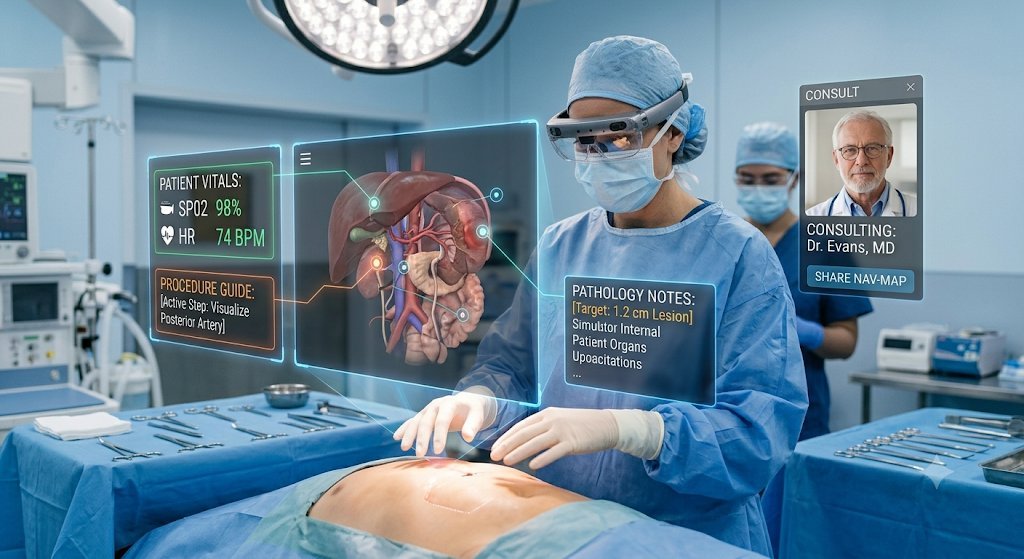
A complete walkthrough of what it's like to start an AR project with Specto XR — from the first discovery call to launch and ongoing support.
Augmented Reality (AR) is no longer a futuristic technology reserved for global brands. Today, businesses of every size are using AR to improve customer experiences, increase engagement, and drive sales — whether that's letting customers virtually try on products, visualize furniture in their homes, or interact with digital content through packaging. AR has become a powerful business tool, but many businesses have one common question: "Where do we start?"
This is exactly where Specto XR comes in. We simplify the entire AR development journey — from understanding your business goals to launching a polished AR experience — ensuring every project delivers measurable value, not just impressive visuals.
The way people shop, learn, and interact with brands has changed dramatically. Customers now expect experiences that are interactive, personalized, and engaging, and Augmented Reality bridges the gap between the digital and physical worlds by letting users interact with virtual objects in real environments. Businesses are adopting AR because it increases customer engagement, improves buying confidence, reduces product returns, creates memorable marketing campaigns, and helps them differentiate from competitors — rather than replacing traditional experiences, AR enhances them.
Step 1 — Understanding Your Business Goals: every successful AR project begins with one simple question — what problem are we trying to solve? Instead of jumping directly into development, our team spends time understanding your industry, target audience, current customer challenges, business objectives, budget, timeline, and desired user experience. This discovery phase ensures the final AR solution is aligned with your business strategy rather than being just another technology experiment.
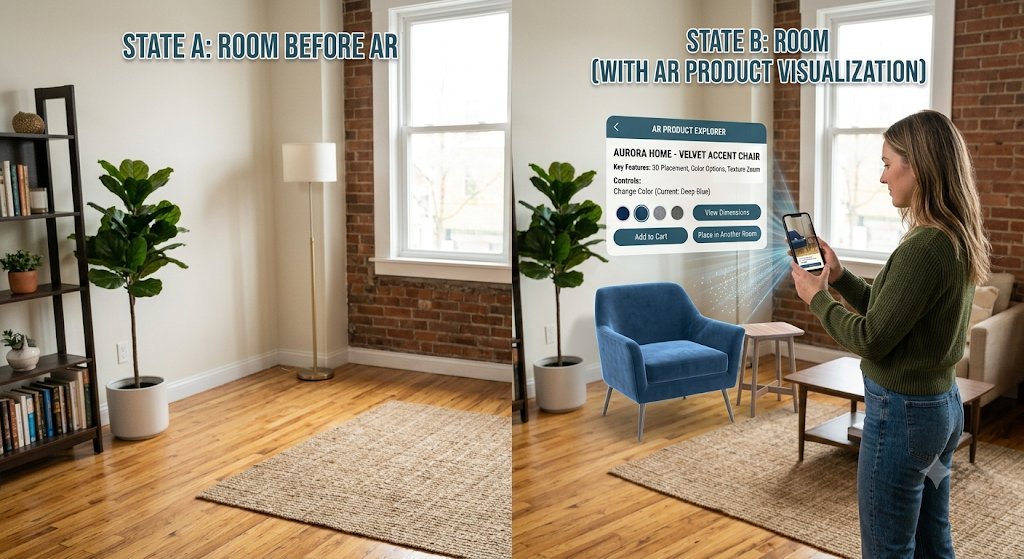
Step 2 — Identifying the Right AR Solution: not every business needs the same type of AR experience, so we recommend solutions based on your specific goals. AR Product Try-On lets customers virtually try watches, shoes, eyewear, jewelry, or cosmetics before purchasing, increasing confidence while reducing returns. AR Product Visualization allows customers to place digital furniture, décor, or electronics directly into their own space before buying. Interactive AR Menus let restaurants replace traditional menus with immersive 3D food experiences that show portion sizes, ingredients, and presentation. Educational AR Experiences help schools and training organizations improve understanding and retention through interactive 3D models and simulations. And AR Marketing Campaigns help brands create memorable product launches, packaging experiences, and promotional campaigns using interactive AR content.
Step 3 — Planning the User Experience: technology alone doesn't make an AR application successful — user experience does. Before writing a single line of code, our designers carefully plan simple navigation, fast loading, clear instructions, minimal user effort, smooth interactions, and mobile optimization, so the experience feels natural and enjoyable.
Step 4 — Designing High-Quality 3D Assets: the quality of an AR experience depends heavily on its 3D content. Our design team creates optimized 3D models that look realistic while remaining lightweight enough to perform smoothly on mobile devices — covering product modeling, texturing, lighting optimization, animation, and performance optimization, for an experience that feels premium without sacrificing speed.
Step 5 — AR Development: once planning and design are complete, our developers begin building the AR experience, which may include image tracking, surface tracking, face tracking, hand tracking, object recognition, markerless AR, interactive animations, custom user interfaces, cloud integration, and analytics — every feature built around your business goals rather than unnecessary complexity.
Step 6 — Testing Across Multiple Devices: an AR application must work reliably across a wide range of smartphones and tablets. Before launch, we perform extensive testing for performance, tracking accuracy, user experience, loading speed, device compatibility, and bug fixing, so users get a consistent experience regardless of their device.
Step 7 — Launch and Ongoing Support: launching an AR project is only the beginning. After deployment, Specto XR continues supporting your business through performance monitoring, feature updates, bug fixes, content updates, analytics review, and future improvements — as your business grows, your AR solution grows with it.
Our AR solutions serve businesses across retail, e-commerce, restaurants, furniture, fashion, education, manufacturing, real estate, healthcare, marketing agencies, and events & exhibitions. Every industry has unique challenges, and we build custom AR experiences to address them.
Choosing the right AR development partner is just as important as choosing the right technology. At Specto XR, we take a business-first approach — building AR experiences with clear objectives so every feature supports your goals. Every solution is custom-developed for your brand, audience, and industry rather than a one-size-fits-all template, optimized for fast loading and smooth performance across modern mobile devices, and built to scale whether you're starting with a single product or planning a large-scale digital transformation. From initial consultation to post-launch support, Specto XR guides you through every stage of your AR journey.